When You No Longer Know If You Want What You Built
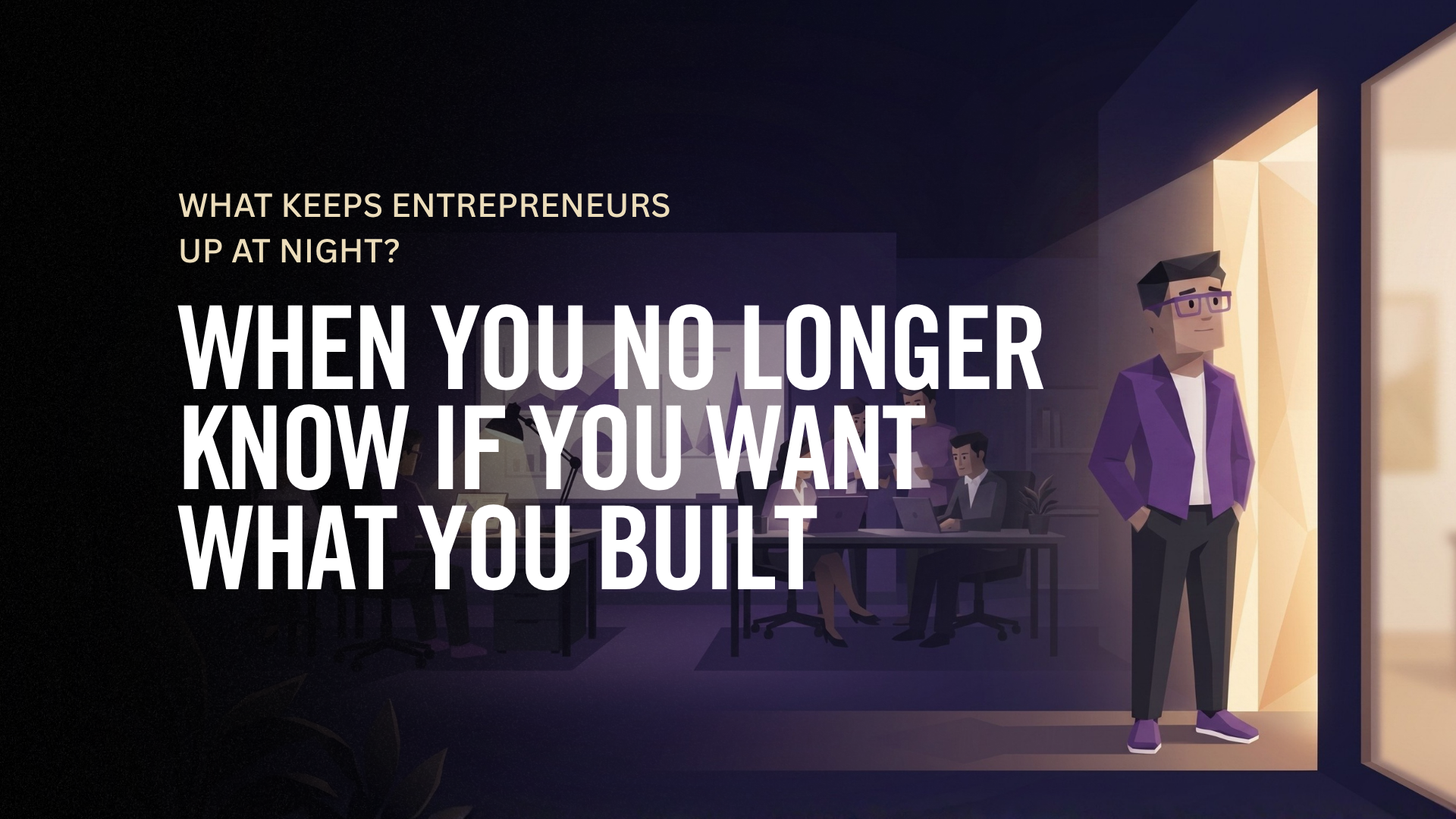
When You No Longer Know If You Want What You Built
Some entrepreneurs do not lie awake because the business is failing. They lie awake because it may keep succeeding. The revenue is coming in. The team is capable. Client partners value the work and the business has a reputation worth protecting. From the outside, there may be no obvious reason to question anything. Inside, a quieter question has started to appear.
Do I still want this?
That can be one of the hardest questions an entrepreneur allows into the room. There is no crisis to point to and no simple event that explains the feeling. The business may still be doing exactly what it was built to do. The uncertainty sits with the person who built it and the life the business now requires from them.
Entrepreneurs give more than time to what they build. They give identity, relationships, belief and years that cannot be separated neatly from the business story. Other people may now depend on the organization for income, opportunity or stability. A founder's name may be closely tied to its reputation. The business can become part of how family, friends and the wider community understand who that person is. Questioning the future can feel like questioning all of it.
There may also be gratitude. The business created experiences, relationships and possibilities that once felt far away. It may have supported a family, employed good people and allowed meaningful work to happen. Those truths do not disappear when desire begins to change. That is what makes the feeling so difficult to explain.
An entrepreneur can be proud of what they built and unsure whether they want to keep living the same version of it. They can care deeply about the people involved while feeling less connected to the role they have to play. They can feel fortunate and still wonder whether the life around the business fits anymore.
The absence of a visible problem can create its own pressure. It is easier to justify change when something is clearly broken. When the business is working, dissatisfaction can feel like disloyalty. The founder may wonder whether they are tired, ungrateful or simply going through a difficult season. The question is often pushed aside because the answer might affect too many people. So the business continues, and the entrepreneur continues with it.
I think many founders become skilled at solving the questions in front of them. They work through cash flow, hiring, client partner needs and the decisions that keep the business moving. The deeper question is different because it does not ask how to make the business work. It asks whether the life attached to that work is still the life they want. Sometimes the most difficult part is allowing the real question to be spoken.
At BTI, I have always believed the stated need and the true need are not always the same. That belief applies to entrepreneurship too. A founder may say they need more growth, a stronger team or a clearer plan. Underneath that request may be a more personal uncertainty about meaning, energy or whether their ambition has changed. A business can still fit the market after it stops fitting the founder.
That sentence does not automatically mean the business should be sold, closed or completely reinvented. It names a tension. The market can continue rewarding something while the person behind it feels less at home inside the life it creates.
There can be grief in admitting that. The earlier ambition was real. The work mattered. The person who wanted this life was not wrong. People change, and sometimes the business remains shaped around a version of its founder who has already begun to move.
The uncertainty may pass. It may be connected to exhaustion or a season that asks too much. It may also be the beginning of a truth that needs more room. The difficult part is not knowing which one it is while continuing to lead with care.
What Keeps Entrepreneurs Up At Night exists for experiences like this. There may be no immediate answer and no decision ready to be made. Recognition can still matter. A founder is allowed to notice that success and desire are no longer moving together without dismissing everything the business has meant.
The business may still be valuable. The work may still be good. The question remains human.
What question about the life your business requires have you been avoiding because the answer might change too much?