What Problem Is Worth a Decade?
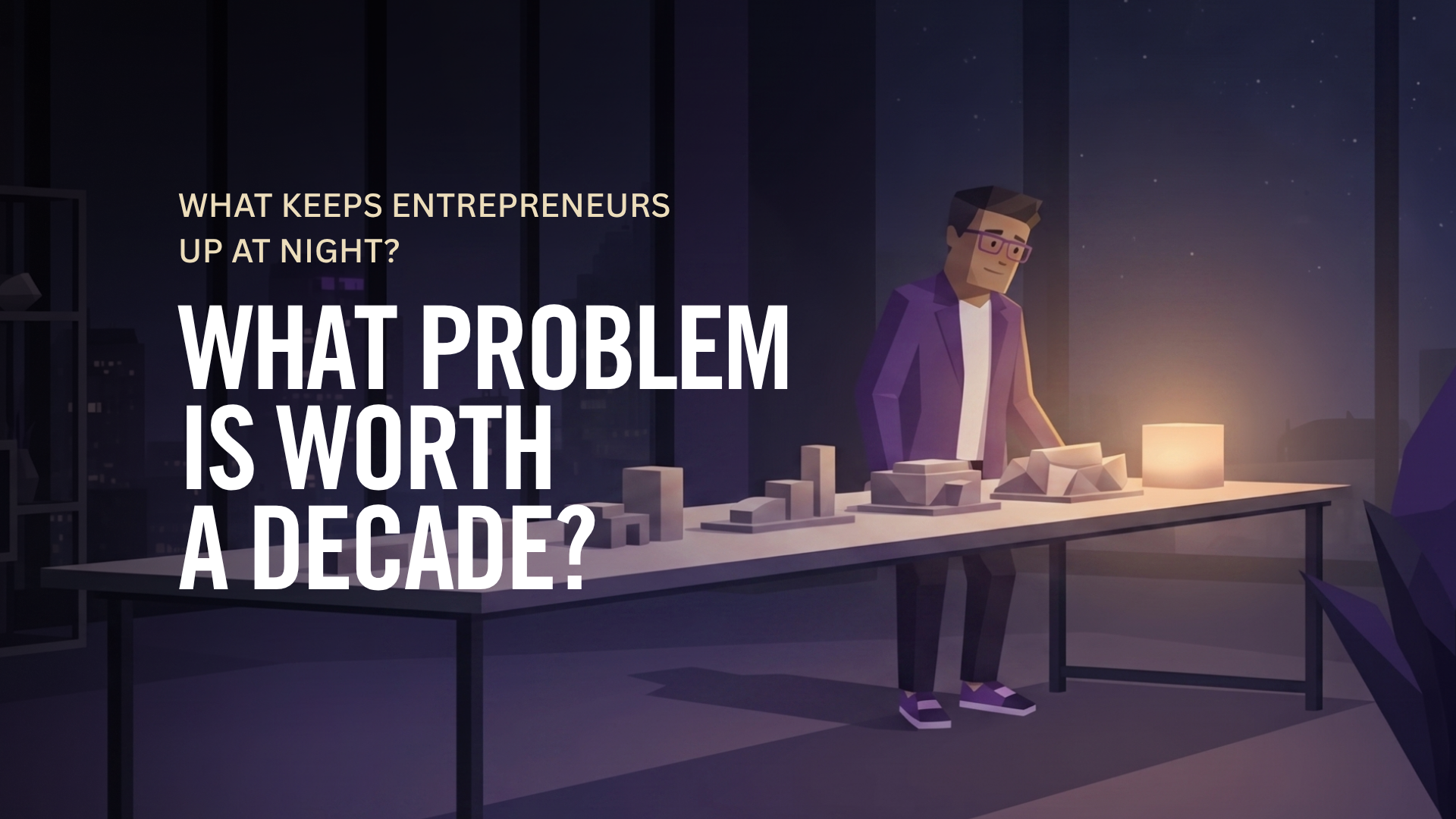
What Problem Is Worth a Decade?
There was a time when ten years felt like an enormous amount of possibility. The question was what I could build, where the business might go and how much could change if I kept pushing. Ten years feels different to me now. It is still full of possibility, but it is also easier to see for what it is: a meaningful piece of a life.
That changes the way I think about opportunity. Entrepreneurs are naturally drawn to what could be next. We see possibilities, notice gaps and imagine what something might become. As experience grows, the number of opportunities can grow too. More people call, more ideas become possible and more doors are open than they were at the beginning.
The challenge is no longer only finding something worth doing. It is deciding what deserves that much of us. I have started thinking of this as the decade question: what problem feels meaningful enough that I would still want to be working on it ten years from now?
I do not mean that every business decision should come with a ten-year commitment. Entrepreneurial lives rarely move in straight lines, and the work itself will keep changing. The question is useful because it forces me to look past the excitement of starting.
Some opportunities are attractive because they are new. Some are interesting because other people see potential in them. Others make perfect financial sense but lose their pull once the novelty disappears. A decade asks whether the underlying problem can hold your attention after the initial energy is gone.
That is where the choice becomes personal. A long commitment is not made only with business resources. It is made with mornings, conversations, family time, mental space and the years in which other parts of life are happening too. The older I get, the more clearly I feel that those things belong in the decision.
This is different from asking whether I still want what I have already built. That question looks at the life created by earlier choices. This one looks forward and asks what deserves the next chapter before it becomes another obligation we are carrying.
There is also something uncomfortable about choosing deeply because every meaningful commitment closes other possibilities. Entrepreneurs are trained to create options. We value flexibility and the ability to move when something changes. But there comes a point where keeping every door open can become its own kind of decision. Nothing receives enough attention to become truly meaningful because we are protecting the possibility of everything else.
I have felt that tension more as my own entrepreneurial journey has matured. I remain curious and excited by new ideas, and I do not want to lose that part of myself. At the same time, I am increasingly aware that curiosity and commitment are not the same thing. An idea can deserve an afternoon without deserving a decade.
Meaning can change as well. Something that deserved ten years of us in one chapter may not deserve the next ten. That does not make the earlier commitment a mistake. We change. The people around us change. Our understanding of contribution changes.
For me, the decade question is not a demand for certainty. It is an invitation to become more honest about what we care enough to stay with when the work becomes ordinary, difficult or less visible. It asks whether the problem itself matters, not only whether the opportunity around it looks impressive.
For established entrepreneurs, perhaps that is one of the privileges and pressures of having more choice. We may finally have the freedom to decide where our attention goes while becoming more aware that attention is also part of the life we cannot get back.
What problem feels meaningful enough that you would still want to be working on it ten years from now?