The Fear of Becoming Irrelevant
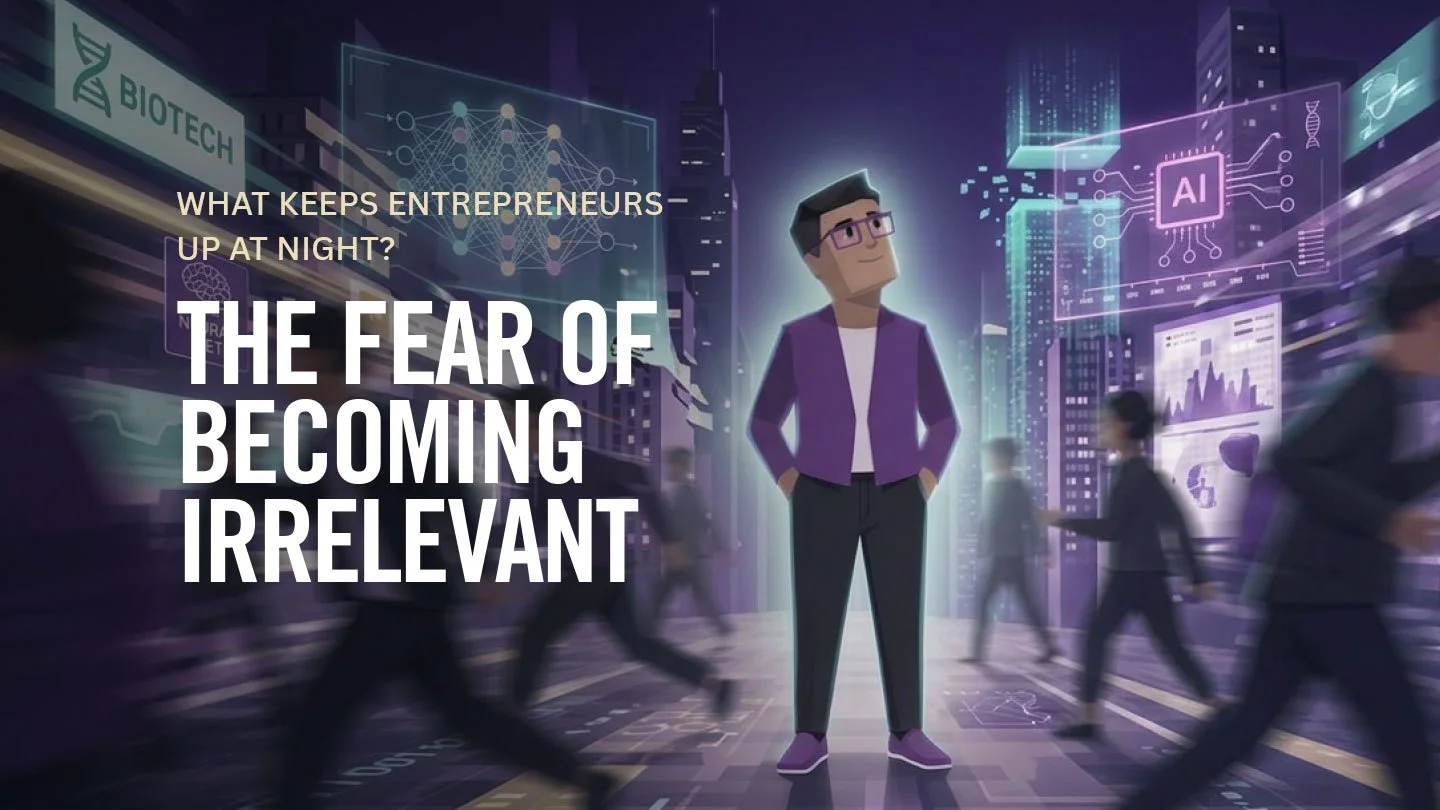
The Fear of Becoming Irrelevant
Over the years, I have had conversations with entrepreneurs who quietly admitted something they rarely shared publicly. They were worried they were falling behind.
Not because they lacked experience, ambition or care. In many cases, these were thoughtful, capable leaders who had built meaningful businesses and navigated more change than most people ever see. But something about this current moment feels different. Technology is evolving quickly. Artificial intelligence is reshaping entire categories of work. Customer expectations are shifting. New entrepreneurs are emerging with different instincts, tools and ways of thinking.
Beneath many of those conversations is a deeper question that is rarely said out loud.
Will I still matter?
I think that question carries more emotional weight than we often acknowledge. For entrepreneurs, relevance is rarely just professional. It becomes personal. What we build is often connected to our purpose, our reputation, our contribution and, at times, our identity. So when the world begins changing quickly, it can feel as though the ground underneath us is moving too.
Entrepreneurship already asks a great deal of us. It asks us to lead, adapt, make decisions with incomplete information and carry responsibility for the people who depend on us. Increasingly, it also asks us to reinvent ourselves while continuing to run the businesses we worked so hard to build.
That can be exhausting.
There are moments when even experienced leaders wonder whether their knowledge is becoming outdated or whether their hard-earned perspective still holds value. We may not always admit it publicly, but the fear of becoming irrelevant can quietly shape how we respond to change.
Sometimes it causes us to chase every trend before understanding whether it truly aligns with who we are. Sometimes it fuels comparison and other times it convinces us that everything we have learned no longer matters.
I do not believe that is true.
I believe relevance has less to do with knowing everything and more to do with remaining willing to learn. Curiosity has always been one of the most valuable traits an entrepreneur can carry. Long before today’s technologies emerged, business owners had to evolve through economic shifts, changing behaviours, cultural movements and entirely new ways of working.
Adaptation is not new. It has always been part of entrepreneurship.
What feels different today is the speed. And because the speed can feel overwhelming, it becomes even more important to distinguish between evolving and abandoning ourselves altogether.
At BTI, we often speak about Human2Human thinking. We believe that behind every title, transaction and technology is a human being seeking understanding, trust and connection. That belief influences how we approach branding, creativity and innovation. It also influences how I think about leadership.
Technology will continue to reshape how we work. It will change tools, processes and possibilities. But I do not believe it diminishes the value of the human qualities beneath meaningful leadership.
Empathy, judgement and wisdom still matter. The ability to ask thoughtful questions, listen deeply and build trust still matters. Technology may change the tools we use. It does not eliminate the importance of the people using them.
Many entrepreneurs put tremendous pressure on themselves to master every new platform and tool. With each shift and disruption, that expectation becomes neither realistic nor sustainable.
Perhaps leadership in this season looks less like certainty and more like openness. Openness to learning, experimenting, asking for help and acknowledging that we do not have everything figured out yet.
That kind of openness takes both humility and strength.
The entrepreneurs I admire most are not the ones who pretend to have all the answers. They are the ones who stay curious, remain students and seek perspective. They surround themselves with people who challenge and support them. They evolve without losing sight of who they are.
If you have found yourself questioning your relevance recently, I want you to know that you are not alone. Many leaders are carrying similar thoughts in quiet moments.
But the answer is not to become someone else.
The invitation may be to become more fully yourself while staying open to what the future can teach you.
Because the future still needs people who care and lead with integrity. People who understand relationships and know how to bring others together. People who are willing to learn and recognize that business has always been human.
That is what gives me hope.
The world will continue to change. Technology will continue to evolve. New opportunities and challenges will emerge. Through all of it, I believe our humanity remains one of our greatest strengths.
Not because it resists change, but because it helps us navigate change together.
So if you have been wondering whether you still matter, perhaps the better question is this:
How might your experience, curiosity and humanity help shape what comes next?
Until next time,
Parveen Dhupar